
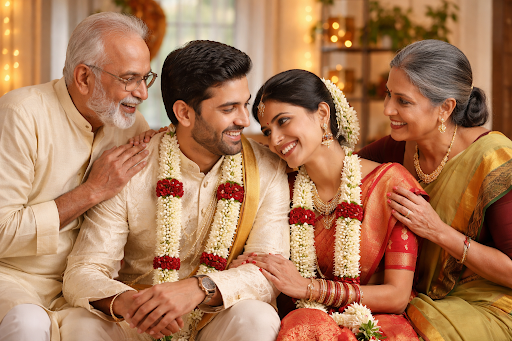
- In Indian culture, marriage is both a spiritual link between two families and a union of two individuals.
- Elders’ knowledge, blessings, and life experiences frequently influence how strong marriages are.
- Elders continue to play a crucial role in marriage and family ties in today’s fast-paced culture that values independence and individuality.
- They provide moral guidance and emotional stability, acting as an anchor.
- It takes understanding, empathy, and respect amongst generations to find harmony in these partnerships.
In Indian culture, marriage is both a spiritual link between two families and a union of two individuals. Elders’ knowledge, blessings, and life experiences frequently influence how strong marriages are. Elders continue to play a crucial role in marriage and family ties in today’s fast-paced culture that values independence and individuality. They provide moral guidance and emotional stability, acting as an anchor. It takes understanding, empathy, and respect amongst generations to find harmony in these partnerships.
Elders’ Importance in Matrimonial Family Ties
Elders are living archives of knowledge. Newlyweds may learn a lot from their tales of cooperation, compromise, and resiliency. In many Indian homes, parents and grandparents actively support marital harmony. Websites such as Kedar Connexxions demonstrate how elder blessings and family values continue to be essential to successful Marathi matchmaking.
Elders frequently stress shared responsibility, communication, and patience—qualities that are the cornerstone of solid marriages. They remind couples that marriage is a journey based on group support rather than individual effort alone, and their presence fosters a sense of continuity and connection.
Overcoming Generational Disparities
While elders provide wisdom, generational differences can sometimes create misunderstandings. While seniors may cherish conventional roles and expectations, modern couples may place a higher priority on personal space and professional goals. Mutual respect and open communication are essential to achieving peace.
Individuality need not be sacrificed to listen to elders. Rather, it entails respectfully expressing one’s own opinions while acknowledging others’ experiences. When both generations are open to change, strong matrimonial family ties flourish. Active communication, empathy, and emotional intelligence all contribute to bridging the gap between tradition and modernity.
Cultural continuity and emotional stability
The presence of elders greatly enhances the emotional health of families. During difficult times, their support and blessings frequently offer comfort. Rituals, festivals, and elder-led shared customs are the foundation of cultural continuity in Indian marriage systems.
Family cohesion is strengthened by these common experiences. Couples who positively welcome elder engagement frequently report feeling more emotionally stable and having a stronger sense of purpose in their marriage. Respecting elders increases intergenerational trust and cultivates thankfulness.
Bringing Extended Families Together
Everyone must put forth effort to maintain harmony in the marriage and family ties. It’s crucial to establish appropriate boundaries, communicate politely, and express gratitude. Harmony can be fostered by small actions like asking for advice, sharing customs, or spending time together.
Elders’ support of the changing demands of younger generations is equally vital. Families become secure environments for development when both parties exercise empathy and adaptability. Collaboration, not control, is the key to marital harmony.
Elders’ voices carry well beyond counsel; they mould morals, foster fortitude, and fortify ties within the married family. Their wisdom provides perspective and stability in a world that is always changing. Couples can discover harmony in extended family relationships by adopting empathy, communication, and respect for one another. In the end, harmony in a marriage develops when customs and contemporary goals coexist.
FAQs
1. What role do elders have in matrimonial family ties?
Marriage and family harmony are strengthened by the guidance, emotional support, and cultural continuity that elders offer.
2.How can couples reconcile generational differences?
through courteous discussion, empathy, and open communication while upholding appropriate boundaries.
3.How important are family customs in a marriage?
Within married family ties, traditions promote harmony, a common identity, and emotional stability.
4.How can extended families support newly married couples?
By respecting the couple’s independence and providing support without taking over.
5.Can customs and uniqueness coexist in contemporary marriages?
Yes, couples can respect traditions while creating their own identities if they work together and have mutual understanding.