
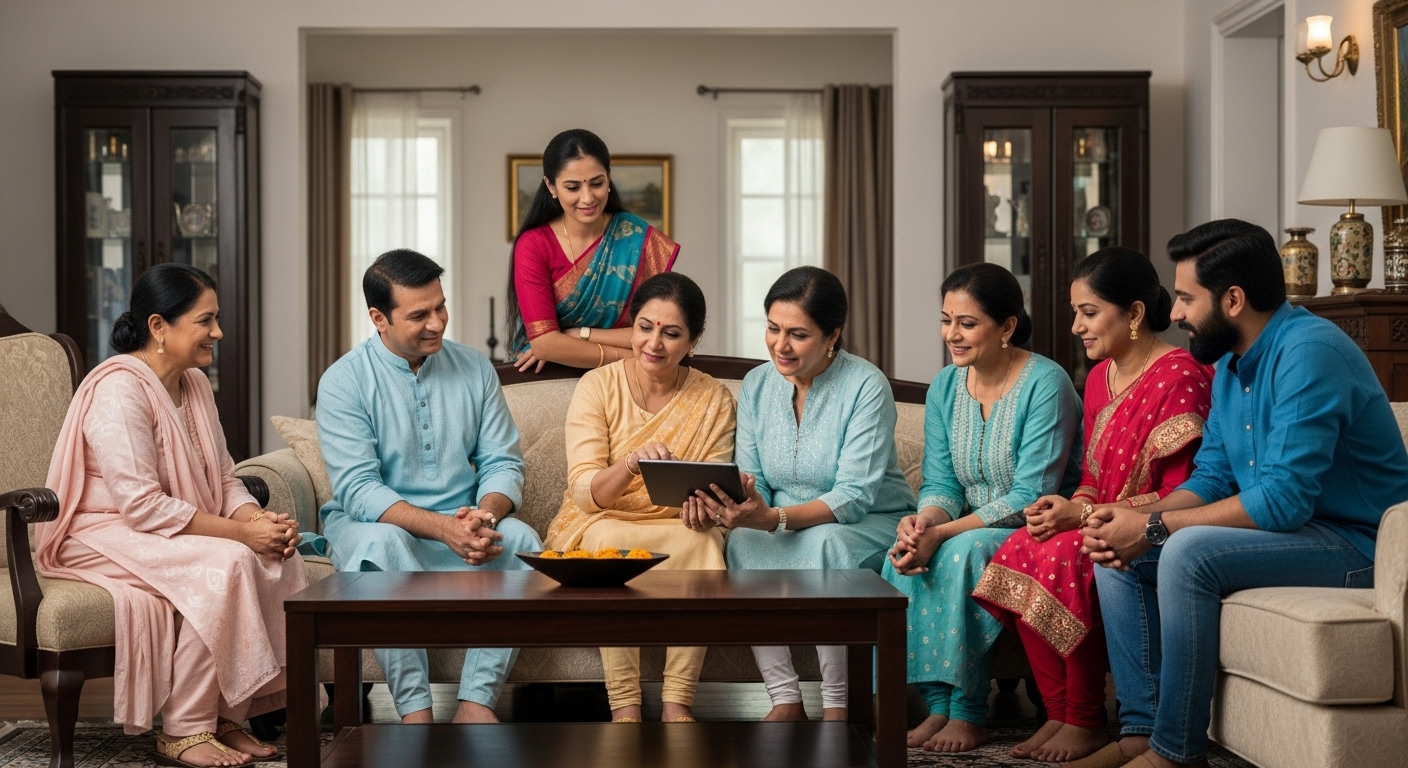
- At the nexus of custom and personal preference is modern matchmaking.
- The younger generation looks for emotional compatibility and common life goals, whereas parents frequently stress long-term stability and cultural continuity.
- These contrasting viewpoints may cause miscommunications among families.
- When all parties feel heard, respected, and participated in the decision-making process, harmony can be achieved, according to a family mediator.
- 1.Redefining Marital Success Together A “successful” marriage is typically defined differently by different generations.
At the nexus of custom and personal preference is modern matchmaking. The younger generation looks for emotional compatibility and common life goals, whereas parents frequently stress long-term stability and cultural continuity. These contrasting viewpoints may cause miscommunications among families. When all parties feel heard, respected, and participated in the decision-making process, harmony can be achieved, according to a family mediator.
1.Redefining Marital Success Together
A “successful” marriage is typically defined differently by different generations. While younger people seek emotional fulfillment and connection, parents may associate it with stability and durability. Through mediation, families are encouraged to redefine success together, combining emotional health and stability. This common definition serves as a framework for guidance, guaranteeing that expectations are reasonable, consistent, and conducive to both individual fulfillment and peace within the family.
2.Parental Concerns: Based on Safety
Concerns about their child’s future stability, social acceptance, and emotional safety typically influence parents’ expectations. Rather than a wish to limit freedom, their preferences about family background, locality, or occupation are a reflection of their lived experiences and social forces.
3.Youth Goals: Seeking Growth and Compatibility
People today place a high value on interpersonal relationships, respect for one another, and personal development. They frequently look beyond conventional boundaries to find a mate who shares their beliefs and way of life, influenced by education, travel, and digital exposure.
4.Emotional escalation and communication gaps
Conflicts frequently result from poor communication rather than disagreement. Defensiveness can result from emotionally intense, unstructured talks. Discussions that are mediated promote attentive listening and assist in calmly and clearly expressing expectations.
5.Tradition and Modernity as Complementary Forces
Tradition and modern thought can coexist rather than be diametrically opposed. When families concentrate on common values like honesty, compassion, and accountability, cultural customs, family values, and emotional compatibility can coincide.
6.The Function of Online Matchmaking
Online platforms enhance options, but because of the perceived hazards, they may also make parents more anxious. Transparency, trust, and a sense of inclusion are fostered by using these platforms as tools and include parents in certain aspects of the process.
7.Adaptability and Collaborative Decision-Making
Both parties must be emotionally mature for matchmaking to be successful. While young adults gain from understanding parental concerns, parents may need to relax strict expectations. Instead of encouraging conflict, shared decision-making promotes cooperation.
8.Handling Social Comparisons and Outside Pressures
Stress during the pairing process is frequently increased by extended family perspectives, societal timelines, and comparisons. While young individuals feel hurried by age-related demands, parents may feel condemned by family members. A family mediator assists families in identifying and deliberately filtering outside distractions, putting the welfare of the parties involved first. Families have less disagreement and greater confidence in the selected course when decisions are motivated by internal clarity rather than social pressure.
Harmonizing parental perspectives in contemporary matchmaking requires sensitivity and balance, according to family mediators. Families make room for respectful, well-informed decisions when they replace control with dialogue and fear with understanding. Stronger intergenerational trust and unity are the results, in addition to a compatible match.