
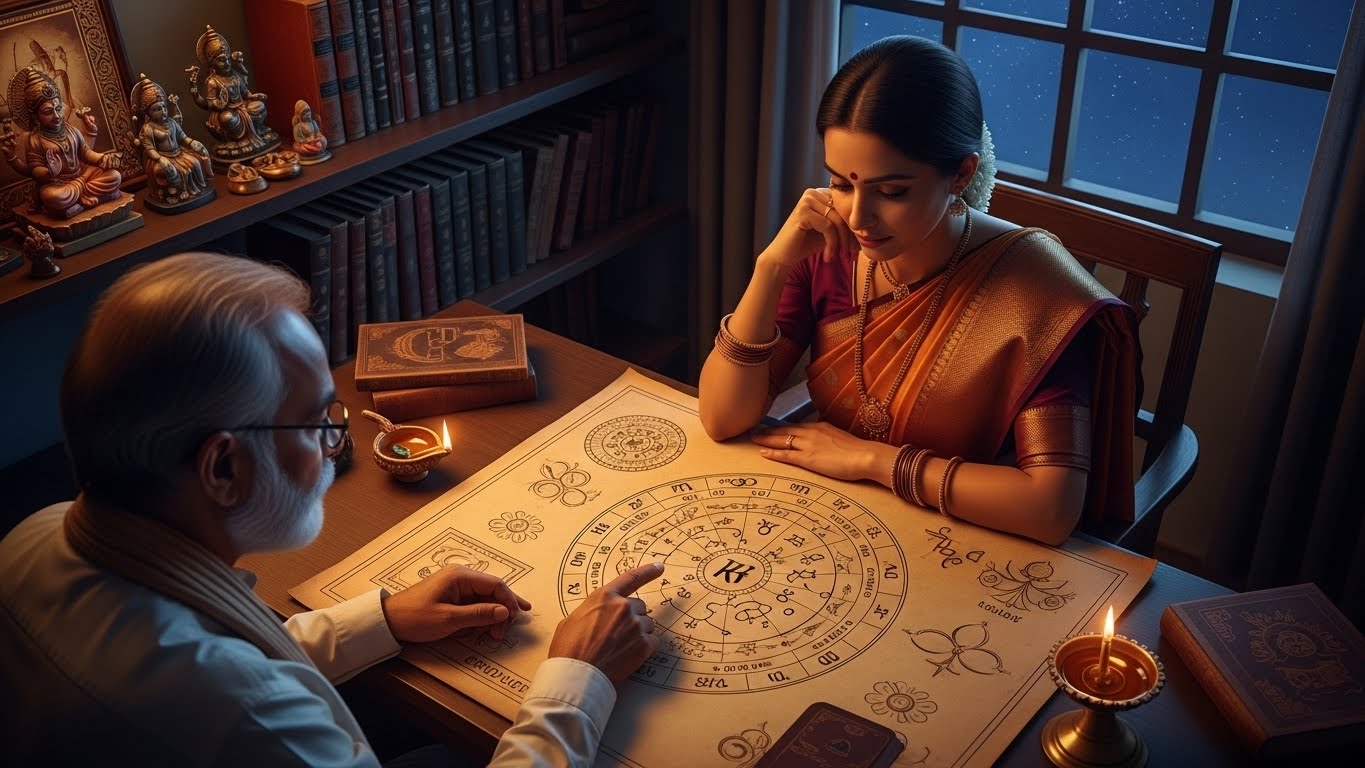
- According to Vedic astrology, Ketu is the shadow planet that controls spiritual development, past-life karma, detachment, and subconscious concerns.
- It often operates below the surface, rather than through outward manifestations, and its impact is subtle yet potent.
- Ketu’s presence in a horoscope can subtly test emotional ties in Marathi marriages, where trust, family harmony, and cultural continuity are highly cherished.
- Couples can better understand Ketu’s significance by viewing times of remoteness or uncertainty as karmic stages intended for emotional development and inner growth rather than as personal failings.
- Ketu and the Character of Trust In a marriage, communication, emotional openness, and certainty are essential for building trust.
According to Vedic astrology, Ketu is the shadow planet that controls spiritual development, past-life karma, detachment, and subconscious concerns. It often operates below the surface, rather than through outward manifestations, and its impact is subtle yet potent. Ketu’s presence in a horoscope can subtly test emotional ties in Marathi marriages, where trust, family harmony, and cultural continuity are highly cherished. Couples can better understand Ketu’s significance by viewing times of remoteness or uncertainty as karmic stages intended for emotional development and inner growth rather than as personal failings.
Ketu and the Character of Trust
In a marriage, communication, emotional openness, and certainty are essential for building trust. On the other hand, Ketu works silently. A strong placement in marital houses, such as the 1st, 7th, or 12th, may lead to overthinking, emotional disengagement, or an inclination to internalise emotions. This disengagement might be mistaken for neglect or lack of commitment in Marathi households, where emotional interaction with spouse and extended family is required. Astrologically, Ketu tests relationships by revealing unresolved emotional patterns and underlying fears rather than directly severing them.
Marathi Marriages’ Cultural Context
Marathi marriages frequently strike a balance between tradition and modernity, placing a high priority on shared responsibility, respect, and family values. Rituals, societal responsibility, and the joint-family system can all exacerbate Ketu’s impact. In contrast to expectations of continuous involvement in family life, a Ketu-influenced partner may prefer isolation, simplicity, or spiritual purpose. If this discrepancy is not intentionally addressed, it may result in miscommunications and a quiet deterioration of confidence.
The Cultural Context of Marathi Marriages
Marathi marriages, which place a strong emphasis on shared responsibility, respect, and family values, often find a balance between tradition and modernity. The joint-family system, rituals, and social obligations can all intensify Ketu’s effects. A Ketu-influenced partner could favour solitude, simplicity, or a spiritual purpose above the demands of constant involvement in family life. This disparity could lead to misunderstandings and a subtle decline in confidence if it is not purposefully addressed.
Astrological and Useful Solutions
The effect of Ketu reacts more to knowledge than to fear. Essential solutions include patience, emotional honesty, and open communication. Spiritual exercises that assist in grounding Ketu’s energies include chanting, meditation, and selfless service. Simplicity, humility, and compassion are considered advantageous in Marathi culture, particularly on Tuesdays or during Ketu times. Crucially, astrologers caution against making fast decisions on mistrust or separation during strong Ketu phases since clarity usually follows.
Ketu’s impact on Marathi marital trust is intended to strengthen rather than weaken bonds. Its deeper goal is to lead couples toward self-awareness and genuine connection, even when it may bring about emotional distance, quiet, or reflection. Understanding and navigating Ketu mindfully transforms it from a troublemaker into a teacher. Even under Ketu’s gentle scrutiny, Marathi marriages can become stronger, more durable, and emotionally aligned by fusing cultural ideals of commitment with thoughtful communication and spiritual balance.